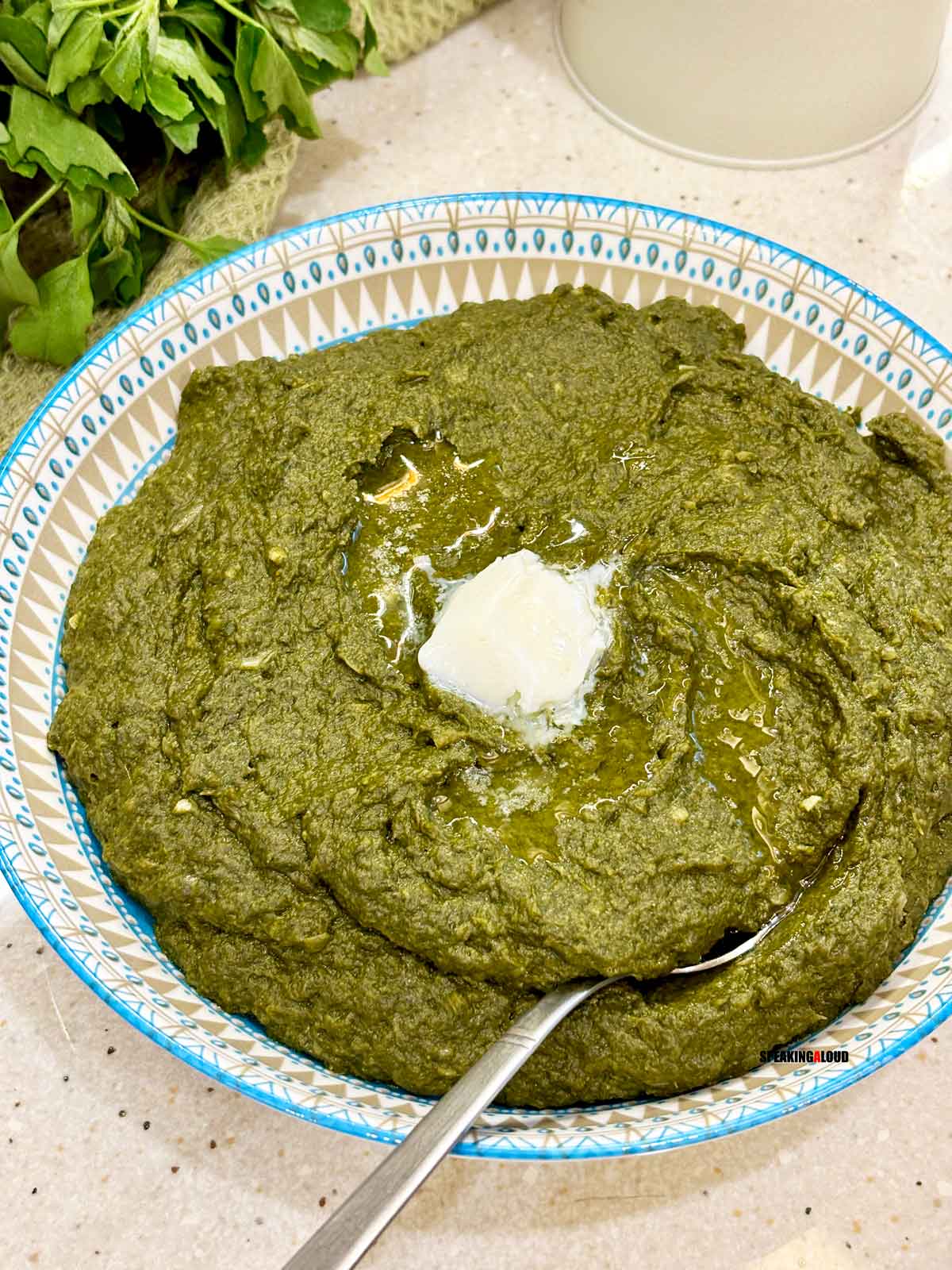
This traditional Punjabi sarson ka saag is a North Indian winter staple, combining the goodness of fresh sarson (mustard greens) with palak, bathua, and methi. Paired with makki ki roti slathered in white butter and a side of jaggery, it’s the ultimate comfort food for Indian winters.
Here in North India, sarson ka saag isn’t rushed. It’s made in bulk so that it can be enjoyed over several days. This allows the flavours to mature. But don’t worry – this easy sarson ka saag recipe utilises a pressure cooker shortcut to cut the cooking time in half while maintaining authenticity.
Ingredients for Sarson da Saag
- For the Greens Puree:
- 1 large bunch mustard greens (sarson ke patte), about 500g, washed and roughly chopped
- 1 bunch spinach leaves (palak), about a kilo, washed and chopped
- ½ bunch bathua leaves (chenopodium/goosefoot), about 250g, washed and chopped (substitute with more spinach if unavailable)
- ½ cup fenugreek leaves (methi), chopped
- 2 radishes (mooli), peeled and chopped, plus their greens if available
- 2-3 green chillies, chopped
- 1-inch ginger, chopped
- 4-5 garlic cloves, chopped
- Salt to taste
- 2-3 cups water
- For Thickening:
- 2 tbsp besan
- For Tadka (Tempering):
- 2 tbsp sarson ka tel (mustard oil)
- 1 tsp cumin seeds
- 1 medium onion, finely sliced
- Pinch of asafoetida (hing)
Recipe instructions
- Prep the Greens: Sort and wash the mustard greens, spinach, bathua, and methi thoroughly under running water to remove dirt (mustard leaves can be gritty). Roughly chop everything, including the radish.
- Pressure Cook the Greens: In a 6-litre pressure cooker, add the chopped greens, radish, ginger, garlic, green chillies, salt, and water. Cook on medium-high for 3-4 whistles (about 10-15 minutes) until soft. Let pressure release naturally. (Stovetop: Simmer in a large pot for 45-60 minutes, covered, stirring occasionally.)
- Blend to Creamy Perfection: Let the mixture cool slightly. Use an immersion blender to puree to a coarse texture – not too smooth, for that rustic Punjabi saag feel.
Stir in the maize flour once the saag has cooled down completely. This will help thicken the saag and also reduce the bitterness while adding body. If it’s too thick, add hot water. - Make the Tadka: Heat oil in a pan. Add cumin seeds and asafoetida; let sizzle. Toss in the finely chopped onions and sauté until golden-brown (5-7 minutes). Add the cooked saag mix to this and give it a good stir.
- Serve Hot: Top with a dollop of freshly made white butter, and enjoy with warm bajre ki roti or makki ki roti.

Tip for perfectly authentic Punjabi Saag
- Reduce Bitterness: Mustard greens are naturally pungent – use fresh ones and balance with more palak or radish. If still bitter, add a tsp of jaggery during simmering.
- Substitutes for Green: No bathua? Double spinach or try kale/collard greens. Maize flour out? Use besan (chickpea flour) or rice flour.
- Storage & Freezing: Refrigerate cooked saag (without tadka) for 4-5 days; reheat with fresh tempering. Tastes better aged!
- Common Mistake: Don’t over-blend; coarse texture is key for traditional Punjabi style.
- Vegan Alternate: Use oil instead of ghee and skip butter.
Serving suggestions
Serve this sarson ka saag with makki or bajre ki roti. Don’t forget to add a dollop of white butter to the saag for extra richness. Add some sliced onions for extra crunch.
Related Winter Punjabi Recipes
- Saag Paneer or Palak Paneer: Creamy spinach-based saag with paneer cubes for a protein boost.
- Methi Paratha: Stuffed fenugreek flatbreads, another winter greens star.
- Gajar Ka Halwa: Warm carrot pudding for a sweet finish to your meal.
- Aloo Methi: Simple potato-fenugreek stir-fry, quick and earthy.
- Punjabi Rajma: Kidney bean curry, a hearty side for rotis.
- Dal Makhani: Creamy black lentils, slow-simmered for winter nights.
- Baingan Bharta: Smoky roasted eggplant mash, another rustic Punjabi gem.
- Makki ki Roti: The classic corn flatbread – soft, gluten-free, and essential for scooping up saag.
Ready to cook? Pin this recipe, share it with friends, and explore more Bengali classics on our blog. Happy cooking!
Follow me or Subscribe to my Channel
Sarson ka Saag | सरसों का साग

Ingredients
- 1 large bunch mustard greens sarson ke patte, about 500g, washed and roughly chopped
- 1 bunch spinach leaves palak, about a kilo, washed and chopped
- ½ bunch bathua leaves chenopodium/goosefoot, about 250g, washed and chopped (sub with more spinach if unavailable)
- ½ cup fenugreek leaves methi, chopped
- 2 radishes mooli, peeled and chopped, plus their greens if available
- 2-3 green chillies chopped
- 1- inch ginger chopped
- 4-5 garlic cloves chopped
- Salt to taste
- 2-3 cups water
- 2 tbsp besan
- 2 tbsp sarson ka tel mustard oil
- 1 tsp cumin seeds
- 1 medium onion finely sliced
- Hing or Asafoetida
Instructions
- Sort and wash the mustard greens, spinach, bathua, and methi thoroughly under running water to remove dirt. Roughly chop everything, including the radish.1 large bunch mustard greens, 1 bunch spinach leaves, ½ bunch bathua leaves, ½ cup fenugreek leaves
- In a 6-litre pressure cooker, add the chopped greens, radish, ginger, garlic, green chillies, salt, and water. Cook on medium-high for 3-4 whistles (about 10-15 minutes) until soft. Let pressure release naturally.2 radishes, 2-3 green chillies, 1- inch ginger, 4-5 garlic cloves
- Let the mixture cool slightly. Use an immersion blender to puree to a coarse texture – not too smooth, for that rustic Punjabi saag feel.
- Stir in the maize flour once the saag has cooled down completely. This will help thicken the saag and also reduce the bitterness while adding body. If it's too thick, add hot water.2 tbsp besan
- Heat oil in a pan. Add cumin seeds and asafoetida; let sizzle. Toss in the finely chopped onions and sauté until golden-brown (5-7 minutes). Add the cooked saag mix to this and give it a good stir.Salt to taste, 2 tbsp sarson ka tel, 1 tsp cumin seeds, 1 medium onion, Hing or Asafoetida, 2-3 cups water
- Top with a dollop of freshly made white butter, and enjoy with warm bajre ki roti or makki ki roti.





Leave a Reply